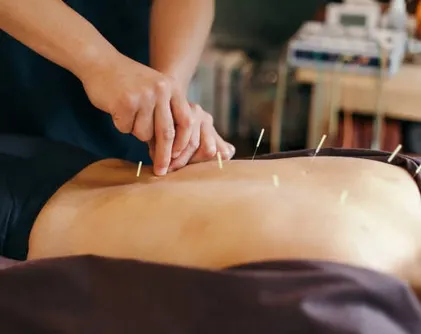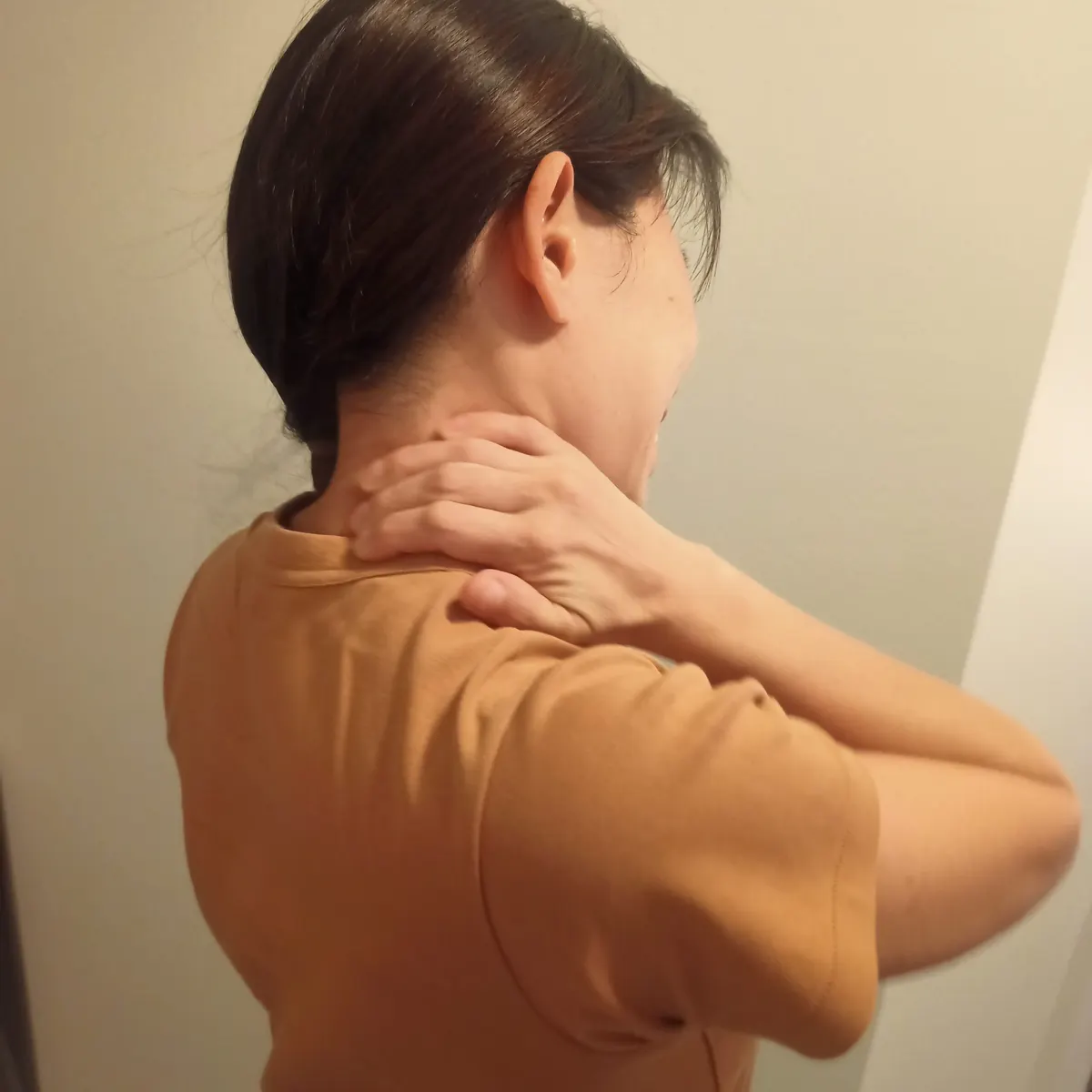
Electro-acupuncture for a tight psoas is a treatment that uses fine needles and a mild electrical current to help release one of the body’s deepest hip flexor muscles. It may suit people with tight hips or lower back discomfort linked to long hours of sitting. Because the psoas sits deep in the body, it can be hard to reach with stretching or massage alone.
Who this is for
-
People with tight hips or front-of-hip discomfort
-
People with lower back pain that gets worse after sitting
-
Office workers, drivers and others who sit for long periods
-
People who feel stiff standing up straight after sitting
What the psoas is
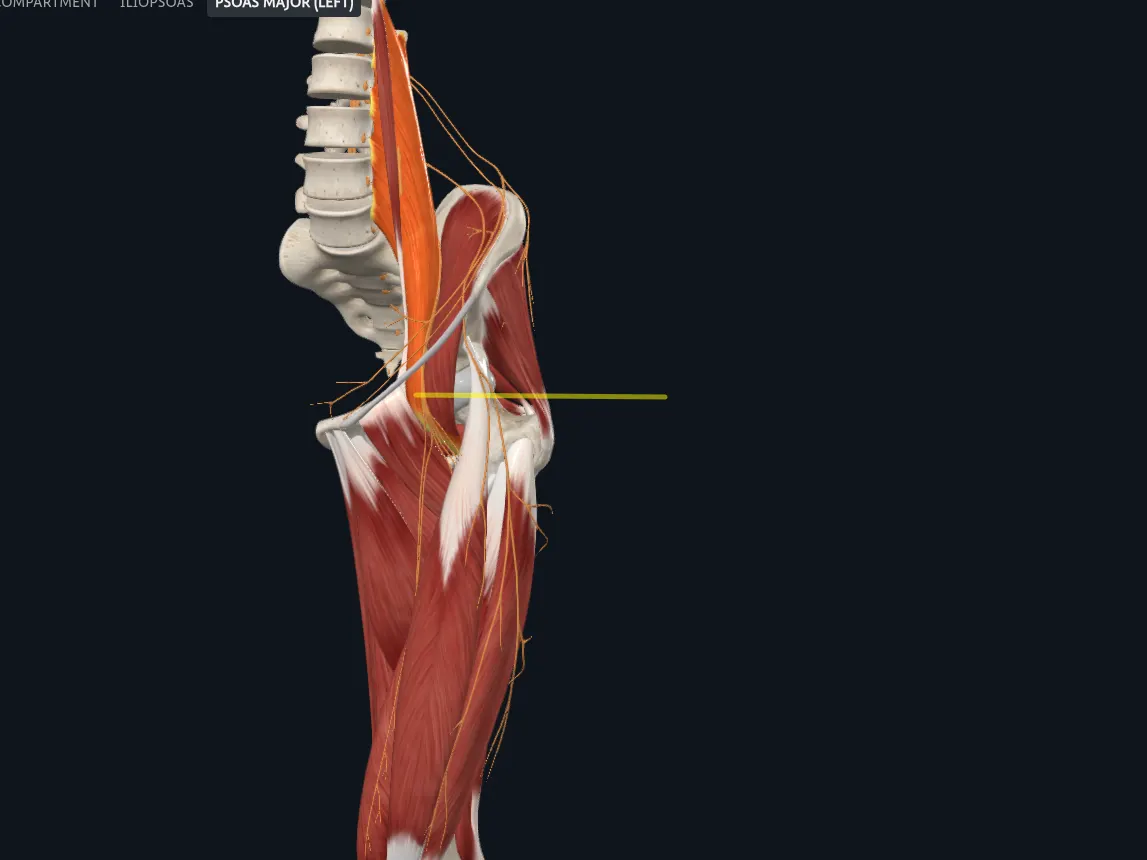
The psoas (pronounced “so-as”) runs from the lower spine, through the pelvis, to the top of the thigh bone. It helps you lift your leg, walk and sit upright. When it’s tight, some people feel it as lower back pain, discomfort at the front of the hip, or stiffness when standing up after sitting.
When this issue usually comes up
Long periods of sitting keep the psoas in a shortened position. Combined with stress, limited movement or an old back or hip injury, this can leave it feeling tight. People often notice it when getting out of a car, standing up from a desk, or first thing in the morning.
How electro-acupuncture may help
Anthony locates the psoas motor point, the area where the nerve enters the muscle, and places a fine needle there. A mild electrical current is connected to the needle. Most people feel this as a gentle pulsing or tapping. The aim is to help the muscle relax, so you can move more comfortably.
People respond differently. Anthony usually combines this with other acupuncture points for the lower back and hips, and with simple movements to do at home. He’ll review how you’re going after a few sessions.
Who shouldn’t have electro-acupuncture
Electro-acupuncture isn’t used for people who:
-
have a pacemaker or another implanted electrical device
-
are pregnant (for this area of the body)
-
have broken skin or infection near the treatment area
Let Anthony know if you have epilepsy, a bleeding disorder or take blood thinners, so he can adjust treatment.
What a home visit usually involves
Anthony brings everything to your home, including a portable treatment table and the electro-acupuncture unit. The first visit takes about 60 minutes and includes an assessment of your back and hips. Follow-ups take about 45 minutes. Read what happens during a home visit.
When to seek medical review as well
See your GP before treatment if back or hip pain comes with:
-
numbness in the groin or inner thighs, or changes in bladder or bowel control (seek urgent care)
-
leg weakness, or pain that spreads down the leg and is getting worse
-
fever, or unexplained weight loss
-
a recent fall or injury
-
severe pain at night that doesn’t ease with rest
Frequently asked questions
Does electro-acupuncture hurt?
Most people feel a pulsing or tapping sensation that’s mild to moderate. The intensity is adjusted to your comfort.
How many sessions will I need?
It varies. Some people notice easier movement within a few sessions. Anthony will review progress with you.
Can I stretch the psoas myself?
Yes, gentle hip flexor stretches and regular breaks from sitting help. Anthony can show you suitable stretches.
Is this the same as dry needling?
There are similarities. Anthony is a registered acupuncturist and combines this technique with a broader acupuncture assessment.
Talk to Anthony
If tight hips or lower back pain are slowing you down, call or text Anthony on 0450 790 038. You can also read more about home-visit acupuncture in Sydney.